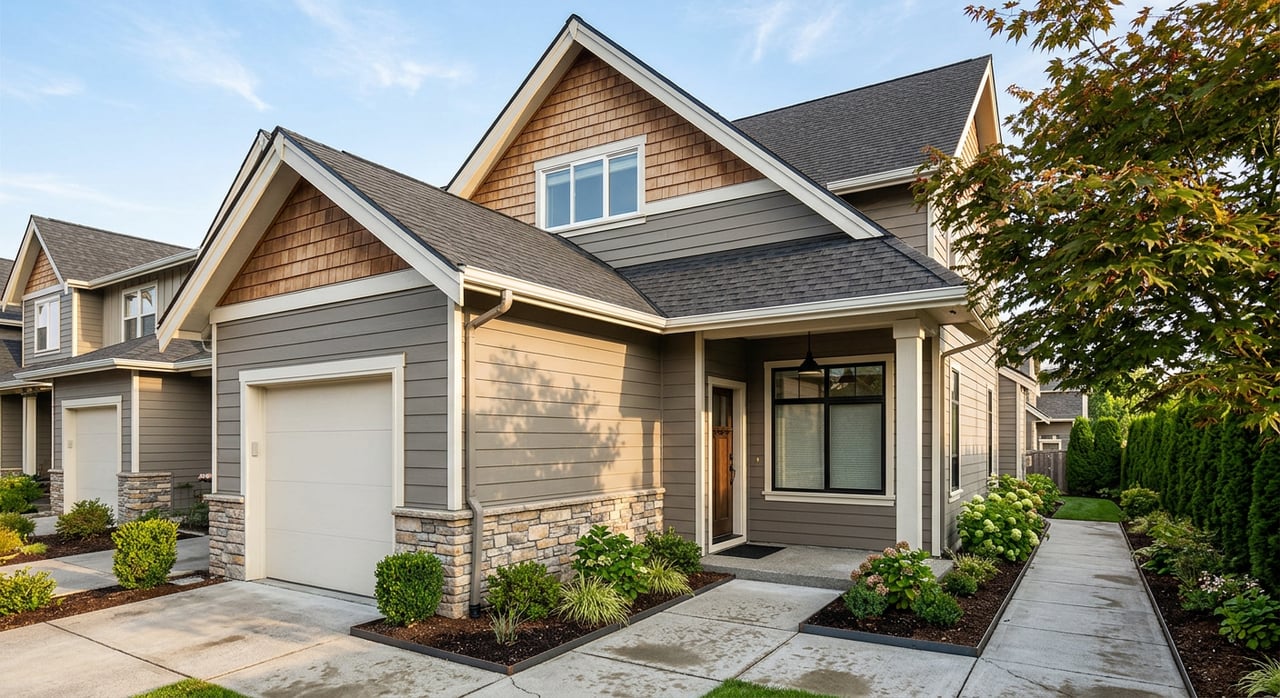
Trying to decide between a townhome and a single-family house in Corvallis? You’re weighing more than floor plans and curb appeal. You’re choosing how you want to live, what you want to maintain, and how your monthly budget works. In this guide, you’ll get a clear, local look at costs, HOA rules, financing differences, lifestyle tradeoffs, and where these options tend to show up in Corvallis. Let’s dive in.
Corvallis market context
Corvallis has a strong university influence and a city planning focus on adding a mix of housing types. The City notes that multi-family demand here runs above state averages for similar communities, which is why you regularly see attached and lower-maintenance options in the mix. You can learn more in the City’s overview of housing stock and production efforts on the City of Corvallis planning page.
Attached homes often appear near transit corridors, downtown, and the Oregon State University corridor. This pattern reflects location convenience and zoning that supports denser housing types.
Cost check: price, taxes, HOA, insurance
Purchase price and trend framing
Prices vary by neighborhood, age, and condition, and attached homes often list at lower price points than comparable detached homes in the same area. Recent market trackers have shown relative stability in Corvallis in the 2025 to early 2026 period, with normal seasonal ups and downs. When you get serious, compare active and recent sales for both townhomes and detached homes in your target area and date-range, then note differences in HOA dues, lot size, and age.
Property taxes in Benton County
Oregon calculates property taxes using Measure 50 rules. Your tax bill depends on assessed value, maximum assessed value (MAV), local levies, and possible compression limits. Because tax outcomes vary by parcel, always verify a specific property’s estimate with the Benton County Assessor and review how taxes are computed on the county’s guide, “How are taxes calculated?”
HOA fees and what they usually cover
Townhomes and condos may charge monthly HOA dues. What you pay typically reflects what the association covers. Common inclusions are exterior maintenance, landscaping, building insurance on common elements, private street upkeep, and reserve contributions. For a quick primer on what HOA fees can include, see Bankrate’s HOA fees overview. Association finances matter, so review the budget and reserve plan before you commit. Industry guidance from the Community Associations Institute explains why reserves are essential for long-term upkeep and avoiding surprise costs. Read more in CAI’s reserve study guidance.
Insurance and special assessments
Insurance for attached homes works differently than for standalone houses. Many townhome and condo communities carry a master policy for the building exterior and common areas, while you carry an HO-6 or tailored policy for the interior and personal property. If reserves are thin or major work is needed, owners can face special assessments. Ask for the association’s latest budget, reserve study, and recent meeting minutes, and review CAI’s overview on reserve studies and funding to understand why this matters.
Financing: condo vs fee-simple townhome
How your lender treats an attached home depends on the legal structure. Condominiums often need project approval for FHA or VA loans, while fee-simple townhomes or planned unit developments may finance like single-family homes. If you plan to use FHA or VA, verify the project’s status early and ask your lender about single-unit approvals where applicable. For a deeper explainer on condo approvals, see this condo financing guide.
Lifestyle and space tradeoffs
Maintenance and time
Townhomes and many condos cut down on exterior chores like landscaping or roof care, which can free up your time. In exchange, you’ll pay HOA dues and share decisions with your neighbors through an association. Detached homes give you control and yard space but require budgeting for upkeep. A common rule of thumb is to set aside about 1 to 3 percent of a home’s price per year for maintenance, as explained in HomeGuide’s ownership cost overview.
Privacy and noise
Shared walls can mean more sound transfer compared with a detached home. Quality of construction, end-unit vs interior placement, and insulation details all make a difference. Visit at different times of day and ask about wall construction and any recorded neighbor disputes. For a simple comparison of pros and cons, see this consumer explainer on attached home tradeoffs.
Space and storage
Detached homes usually offer larger private yards, driveways, and storage options like sheds, attics, or larger garages. Townhomes prioritize efficient layouts and may still offer attached garages, but outdoor space is often smaller. Think about gardening needs, pets, hobbies, and gear storage when you compare floor plans and lot types.
Resale and buyer pool near OSU
Proximity to campus can support steady interest from student and university-affiliated renters or buyers, which can help liquidity and influence seasonality. If you plan to rent later, compare HOA rental rules and timelines for approvals. Seasonality around the academic calendar can affect demand near campus, so factor timing into your plans.
Where townhomes cluster in Corvallis
You’ll most often find attached options in areas that allow greater density and offer transit or quick trips to downtown and campus. That includes parts of South Corvallis, sections of NW Corvallis, and areas along the OSU corridor. The City’s South Corvallis Area Plan outlines where denser housing may be encouraged, and the city’s housing stock page provides broader context for local production and planning efforts.
How to compare a townhome vs house
Use this simple framework to compare apples to apples:
- Monthly budget: Add mortgage, property taxes, HOA dues, insurance, and a maintenance reserve. For taxes, confirm estimates with the Benton County Assessor. For maintenance planning, reference the 1 to 3 percent guideline.
- Responsibilities: List who maintains the roof, siding, windows, landscaping, and private streets. Verify with the CC&Rs and resale package.
- Flexibility: Check HOA rules on rentals, exterior changes, parking, pets, and short-term rentals.
- Lifestyle: Score privacy needs, storage, yard use, proximity to transit, and commute or campus access.
- Risk and reserves: Review the association’s budget, reserve study, and any special assessments using CAI’s reserve guidance as your lens.
Buyer checklist before you tour
- Confirm legal form: Ask the listing agent whether the property is a condominium, a fee-simple townhome, or a single-family home, and request the declaration and CC&Rs. See Oregon’s condo statute in ORS Chapter 100 and the planned community rules in ORS Chapter 94.
- Request the HOA resale package: Budget, reserve study or funding plan, recent meeting minutes, and any pending or recent special assessments. Learn why this matters from CAI’s reserve resources.
- Check financing implications early: If you need FHA or VA, verify condo approval or ask your lender about single-unit approvals. Start with this FHA condo approval overview.
- Clarify what dues cover: Roof, exterior, master insurance, landscaping, private streets, and utilities. Read this plain-English HOA fees primer.
- Compare total monthly cost: Mortgage plus taxes from the Benton County Assessor, HOA dues, insurance, and a maintenance set-aside guided by the 1 to 3 percent rule.
- Visit at different times: Check evening and weekend noise, parking, and neighbor activity. For attached options, ask about party-wall construction and insulation. See this consumer guide to attached-home pros and cons.
What it looks like in your monthly budget
Build a quick worksheet for each property you like:
- Mortgage and interest: Based on your preapproval and current rates.
- Property taxes: Use parcel-specific estimates from the Benton County Assessor.
- HOA dues: Note what’s included and if there are any pending increases.
- Insurance: HO-6 for condos or tailored coverage for townhomes that aligns with the HOA’s master policy.
- Maintenance reserve: Use the 1 to 3 percent rule to plan annual savings, even when an HOA covers exterior items.
A side-by-side like this helps you see true monthly differences between a townhome and a house beyond the list price alone.
Ready to find your fit?
Whether you want a low-upkeep townhome near transit or a detached home with room to spread out, you deserve clear, local guidance. Our team knows Corvallis neighborhoods, HOA nuances, and how to underwrite the real costs so you can buy with confidence. When you’re ready, connect with Wildland Property Group to compare options and set up smart tours.
FAQs
What is the difference between a condo and a fee-simple townhome in Oregon?
- Condos are typically governed by the Oregon Condominium Act, with the association maintaining exteriors and common areas, while fee-simple townhomes often function like single-family lots with varying HOA responsibilities. Review ORS Chapter 100 and your CC&Rs to confirm.
How are property taxes calculated in Benton County?
- Oregon uses Measure 50 rules that consider assessed value, maximum assessed value, local levies, and compression limits, so tax bills vary by parcel. Check details and parcel estimates with the Benton County Assessor.
What do HOA fees usually cover on Corvallis townhomes?
- Coverage varies, but dues often fund exterior maintenance, landscaping, common-area insurance, private street upkeep, and reserves. Get specifics from the resale package and see this HOA fees primer.
Can I use FHA or VA financing for a condo in Corvallis?
- It depends on project approval and your loan program. Some condos require FHA or VA project approval, while fee-simple townhomes may finance like single-family homes. Review this FHA condo approval guide and talk with your lender early.
How should I budget for maintenance on a detached home vs a townhome?
- Detached homes often need a larger maintenance reserve for items like roofing and landscaping, while townhomes may share some exterior costs via HOA dues. A common planning rule is the 1 to 3 percent annual maintenance guideline.