You can fall in love with a Philomath-area property in five minutes and still spend months untangling what it can actually do. That is especially true with recreational land, where privacy, timber, views, and trail access can be big draws, but zoning, access, hazards, and utility limits can change the picture fast. If you are thinking about buying recreational land near Philomath, this guide will help you focus on the issues that matter most before you write an offer. Let’s dive in.
Why Philomath recreational land stands out
Philomath offers a rare mix of convenience and escape. The city is less than 10 minutes from Corvallis and about 50 minutes from Newport, Eugene, or Salem, which makes the area appealing if you want a true getaway feel without being far from daily services.
That location also helps explain why land near Philomath attracts a wide range of buyers. Some are looking for a weekend base near trails and public lands, while others want long-term timber potential, privacy, or a future legacy property. In this market, a parcel can feel remote while still being part of a highly regulated rural landscape.
Start with legal use
Before you think about cabins, camping, roads, or timber, confirm what the parcel is legally allowed to be used for. In Benton County, zoning drives a lot of the answer, and two wooded properties that look similar online may come with very different rights and limitations.
Forest Conservation zoning matters
Benton County’s Forest Conservation zone is meant to conserve forest land and protect the county’s timber-producing areas. In that zone, non-forest uses are generally prohibited unless the county code specifically allows them.
The zone also has an 80-acre minimum parcel or lot size, and the county lists one dwelling per tract plus private hunting and fishing operations without accommodations as permitted uses. That means you should not assume a recreational parcel automatically allows a house, cabin, short-term retreat setup, or expanded camp-style use.
Rural Residential is not the same thing
The county’s Rural Residential zone is intended for rural residential lifestyles outside urban areas on land generally considered unsuitable for resource use. Even there, the code ties suitability to water, sewage, roads, and natural hazards.
That is why one parcel may seem buildable in a listing description, while another may be far more limited after county review. If your goal includes future improvements, it is important to confirm legal use before you make plans around the property.
Look closely at access
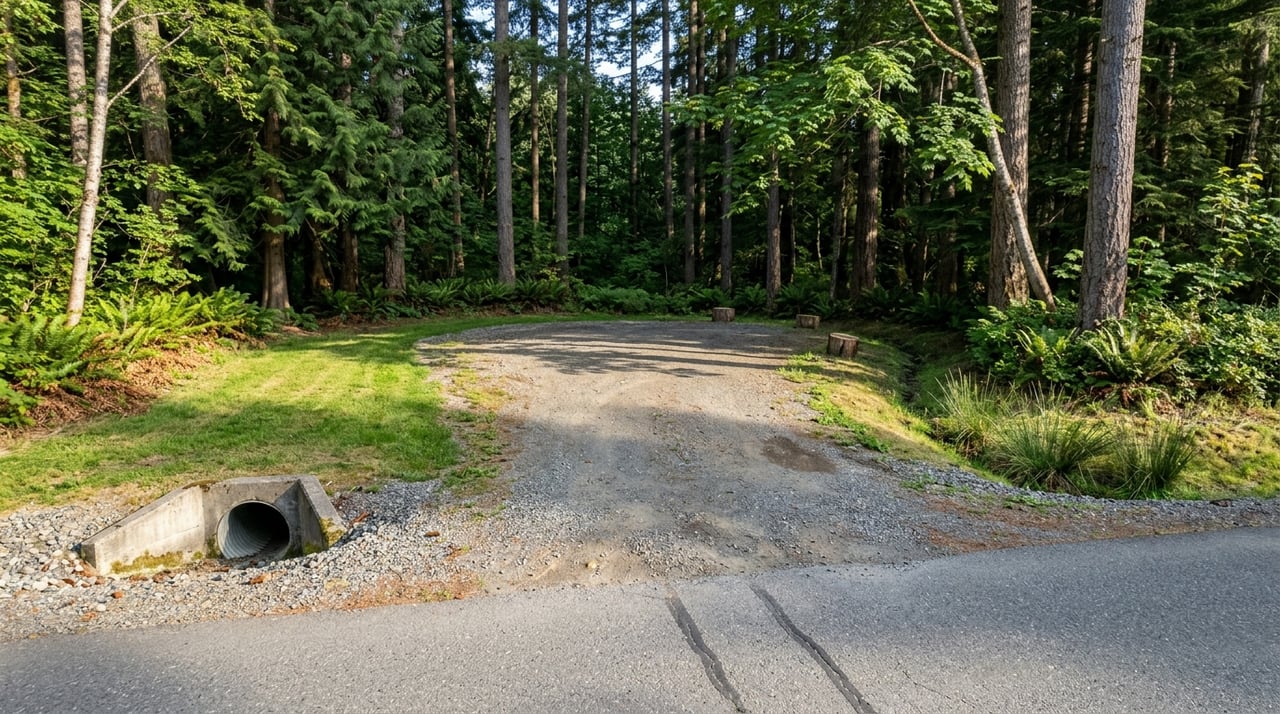
Access is about more than seeing road frontage on a map. For recreational land near Philomath, you also need to know whether the property is practical to reach in every season and whether emergency access would be workable if you ever improve the land.
Benton County uses road approach permits and other review tools when buyers move toward development. The county sheriff’s office also points residents to road and hazard resources for seasonal conditions, which matters if a driveway is steep, unpaved, gated, or likely to be used in winter weather.
Ask access questions early
When evaluating a parcel, make sure you understand:
- Whether access is deeded and clearly documented
- Whether the driveway or road is shared, private, or county maintained
- How the route performs during snow, ice, and heavy rain
- Whether a trailer, truck, or equipment can realistically reach the site
- Whether emergency vehicles could access the property if needed
A property that works great in July may feel very different in January. That is a key issue for buyers who plan to use land year-round.
Study terrain and natural hazards
The Philomath area sits near the Coast Range foothills, and that makes topography a major part of value and usability. Slope, soil, drainage, and hazard exposure can affect recreation, timber, access, and future improvements.
Flood and landslide screening are essential
Benton County says about 57,000 acres are mapped as flood hazard, and nearly 3,200 properties are partly or entirely within a flood hazard area. The county also identifies landslides and debris flows as real concerns, especially in the Coast Range.
For that reason, it is smart to check flood and landslide mapping for the exact tax lot, not just the surrounding area. A beautiful creek setting or hillside view can come with meaningful limitations that are not obvious from photos.
Wildfire should shape your decision
Wildfire is a recurring issue in Benton County. The county notes that rural areas often have no hydrants, narrow roads, sloping terrain, and forest vegetation, and it states that embers are the main cause of home ignitions.
If you are buying land for a future cabin, camp, or seasonal use, wildfire planning should be part of your purchase analysis from the start. Defensible space, fuel reduction, and reliable access are not just maintenance tasks. They can affect whether a property fits your risk tolerance and your intended use.
Do not judge timber by appearance alone
A lot of recreational buyers are drawn to wooded acreage for privacy and long-term value. Near Philomath, that can be a smart reason to buy, but it is important to separate scenic appeal from actual timber potential.
Benton County’s code says forest capability is tied to factors like soil type, slope, terrain suitability, parcel size, and location. The county relies on NRCS soil survey data, plant association guides, and site-class mapping when evaluating productivity.
Timber value needs separate review
That means acreage alone does not tell you much. Two parcels with similar tree cover may have very different stocking levels, harvest access, road needs, and long-term carrying costs.
If timber value matters to you, a consulting forester can help estimate:
- Current stocking and species mix
- Harvestability and road needs
- Reforestation requirements or planning needs
- Long-term management costs
- Whether the land may qualify for forestland tax treatment
Benton County’s assessor says forestland is land held or used predominantly for growing and harvesting marketable tree species, and the land must be adequately stocked or supported by a reforestation plan. The Oregon Small Tract Forestland program can offer reduced annual assessment for qualifying acreage, but disqualification can trigger a recapture penalty.
Check water and septic feasibility
Utilities are one of the biggest surprises in rural land purchases. A parcel outside Philomath city limits may look close to town, but that does not mean it has public water or sewer service.
Philomath provides municipal water within the city, but rural properties should generally be assumed to rely on private wells and onsite wastewater systems unless public service is clearly shown. Benton County Health also notes that many homes need additional wastewater treatment because of soil conditions or space restrictions.
Approval comes before installation
For septic, the main question is not whether you want a system. It is whether the site can support one. Oregon DEQ requires a site evaluation to determine whether a parcel is suitable for a septic system, and factors like groundwater depth, soil type, setbacks, landscape position, and geology all matter.
If there is an existing well, Oregon Health Authority requires seller testing during a real estate transaction for arsenic, nitrate, and coliform. Oregon Water Resources Department also requires a well ID label within 30 days of property transfer.
Review permit history before you offer
One of the best ways to avoid expensive surprises is to research the parcel’s paper trail. Benton County provides tools and applications that help buyers review ownership, sales history, tax lot mapping, permit history, and legal parcel questions.
The county’s permit and application system also shows how detailed land review can become. Structural permit site plans must show features like existing structures, wells, septic systems, and property lines, and the county includes forms for access, water supply, and research requests.
A simple due diligence sequence
If you want a practical way to evaluate recreational land near Philomath, this is a strong order to follow:
- Review ownership, tax lot maps, taxes, and sales history.
- Confirm zoning, overlays, and legal use.
- Check flood, landslide, and wildfire conditions for the exact parcel.
- Verify deeded access, road condition, and winter drivability.
- Review well, septic, and permit history.
- If timber matters, get a forester’s opinion on stocking, access, and tax implications.
That sequence helps you focus on facts before emotion takes over. It can also save time by identifying deal-breakers early.
Nearby recreation can support value
Recreational land buyers often care as much about what is nearby as what is on the property. Philomath benefits from strong access to public outdoor destinations, which can make certain parcels more attractive for weekend use or long-term enjoyment.
Marys Peak is 25 miles west of Corvallis and is the highest point in Oregon’s Coast Range at 4,097 feet. It offers hiking, snowshoeing, and cross-country skiing, which adds to the area’s outdoors appeal.
Closer to Philomath, Beazell Memorial Forest offers more than 500 acres of park space and hiking trails, and Fort Hoskins Historical Park provides day-use trails and gated access from dusk to dawn. OSU’s McDonald-Dunn Research Forest also draws heavy recreational use. For buyers, proximity to trailheads and public land can be a meaningful value driver, especially for properties meant for frequent outdoor use.
Build a local team early
Recreational land is rarely a one-person decision. Even when a parcel seems straightforward, rural Benton County often requires site-specific review from multiple professionals.
Depending on the property, you may need county planning staff, a surveyor or civil engineer, a septic specialist, a well professional, or a consulting forester. If wildfire planning is important, the community wildfire forester can also be a useful resource for defensible-space and fuel-reduction guidance.
What matters most before closing
The best recreational land purchases near Philomath usually balance lifestyle goals with clear, verified facts. You want a property that feels like an escape, but you also want confidence in zoning, access, hazards, utilities, and long-term carrying costs.
When you take the time to underwrite the land properly, you put yourself in a better position to enjoy it, improve it if allowed, and protect its value over time. That kind of due diligence is what turns a great-looking parcel into a smart purchase.
If you are considering recreational land near Philomath and want help sorting through access, timber, utility questions, or overall property fit, Wildland Property Group can help you evaluate the details and move forward with clarity.
FAQs
What should you check first when buying recreational land near Philomath?
- Start with zoning, legal use, and access. Those three items shape whether the property fits your goals before you spend time on deeper inspections.
Can you build a cabin on recreational land in Benton County?
- Not always. Benton County zoning and site conditions determine whether a dwelling or other structure may be allowed, so you should confirm legal use before assuming a cabin is permitted.
Why is wildfire a major issue for rural land near Philomath?
- Benton County says rural areas often have narrow roads, sloping terrain, forest vegetation, and limited hydrants, which makes access and defensible space important parts of a land purchase.
Do rural parcels near Philomath usually have city water and sewer?
- Usually not. Unless public utility service is clearly shown, rural properties outside city limits should generally be expected to rely on private wells and onsite wastewater systems.
How do you evaluate timber value on Philomath-area land?
- Look beyond tree cover and acreage. Soil, slope, stocking, harvest access, and management costs all matter, and a consulting forester can help you assess the real timber potential.
Why does nearby public recreation matter for Philomath land buyers?
- Access to places like Marys Peak, Beazell Memorial Forest, Fort Hoskins, and McDonald-Dunn Research Forest can make a parcel more appealing for weekend use, outdoor recreation, and long-term enjoyment.