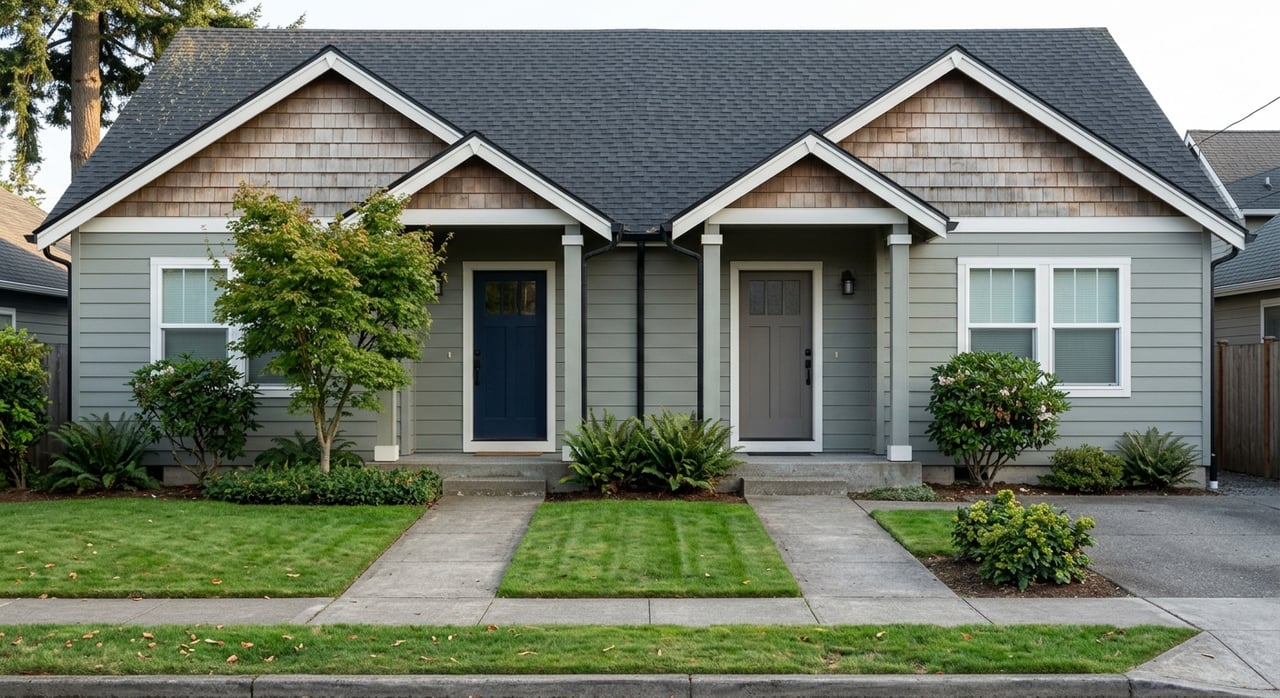
Thinking about buying a small rental in Corvallis? It can look appealing at first glance: strong renter demand, a major university, and a steady need for housing. But before you buy, you need a clear picture of local pricing, turnover patterns, repair risk, and city rules so you can judge whether a property truly fits your goals. Let’s dive in.
Corvallis Rental Market Basics
Corvallis is a renter-heavy market compared with many Oregon cities. The U.S. Census Bureau reports an owner-occupied housing rate of 41.7%, a median gross rent of $1,391, and a median owner-occupied home value of $502,900. That mix matters because it points to real rental demand, but it also shows that buying in is not necessarily low-cost.
The City of Corvallis describes the local housing stock as a mix of single-family homes, duplexes, and multifamily properties. The city also notes that demand for multifamily housing is stronger than state averages because Corvallis is a college community. For you as a buyer, that means rental demand may be solid, but competition and acquisition costs can still be challenging.
OSU Shapes Local Demand
Oregon State University is one of the biggest demand drivers in Corvallis. OSU reports 25,391 students with Corvallis as their primary campus in 2025–26, and 5,260 students living in university housing in 2025. That leaves a substantial off-campus population looking for places to live.
This does not mean every rental near campus is an automatic win. It does mean your tenant pool may be influenced by the academic calendar, which can shape move-in dates, lease timing, and seasonal turnover. If you are considering a property that may appeal to student renters, you should underwrite for that reality from day one.
Property Types to Consider
Corvallis offers a few common paths for small rental buyers. You may be looking at a single-family home, a duplex, or a small multifamily property. The right fit depends on your budget, your management style, and the condition of the property.
A single-family home may offer a familiar layout and a broader resale audience. A duplex can spread vacancy risk across two units, while a small multifamily property may align better with the city’s strong multifamily demand. Corvallis also allows accessory dwelling units that can be attached or freestanding, which may matter if you are considering a house-plus-ADU setup.
Older Housing Means Bigger Repair Planning
One of the most important things to know before you buy is that Corvallis has a meaningful amount of older housing stock. The city says it has about 26,330 housing units, and a large share of that inventory is at or nearing an approximate 40-year serviceable-life benchmark. In practical terms, that is your signal to look beyond cosmetic updates.
Older rentals can come with larger capital needs over time. Roofs, exterior paint, plumbing, electrical systems, appliances, flooring, and turnover repairs can all become major budget items. If you buy an older home or duplex in Corvallis, your numbers should include true reserves for both routine maintenance and larger future replacements.
Rent Expectations Should Stay Grounded
A smart rental purchase starts with realistic income assumptions. Corvallis has a citywide median gross rent of $1,391, but that number should not be treated as a rent target for every property. Rent depends on unit size, condition, and the property’s specific location.
HUD’s FY 2026 Fair Market Rent figures offer another useful comparison point for the Corvallis metro area. Those figures are $1,200 for a studio, $1,290 for a one-bedroom, $1,622 for a two-bedroom, $2,256 for a three-bedroom, and $2,545 for a four-bedroom. These are best used as benchmarks, not promises of what your unit will earn.
For example, a two-bedroom benchmark of $1,622 sits above the citywide median gross rent. That gap is a reminder that you should compare your specific property to similar units rather than relying on one broad average. A clean underwriting model starts with local reality, not optimism.
Vacancy in Corvallis Is About Tenant Mix
There is not one simple vacancy story for every small rental in Corvallis. The city’s housing materials and OSU enrollment data suggest that tenant mix plays a big role, especially in areas that may attract students or other renters tied to the academic year. That means your biggest vacancy risk may be timing, not just demand.
You should stress-test summer turnover and shorter lease-up windows around the school calendar. Even in a market with strong renter demand, a poorly timed vacancy can affect cash flow. If you are buying a property that may depend on student-oriented leasing patterns, that seasonal rhythm needs to be part of your plan.
Don’t Miss Corvallis Registration Rules
Local compliance is part of your ownership cost in Corvallis. The city requires owners of residential rental properties to register with the Rental Housing Program and pay an annual fee. For 2026, that fee is $17 per rental unit.
Timing matters here. The city states that registration must be completed within 30 days of closing on a purchased rental property. If you fail to register or pay the fee, additional fines may apply, so this is one of the first post-closing tasks to handle.
Local and State Rules Both Matter
Owning a rental in Corvallis means following both local property standards and Oregon landlord-tenant law. The city says Chapter 9.02 of the Corvallis Municipal Code is the Corvallis Livability Code, which sets local quality standards for rental housing. The city also directs landlords to ORS Chapter 90 for statewide residential landlord-tenant rules.
That matters because compliance is not just about rent collection. It also affects property condition, deposits, notices, and day-to-day operations. If you are buying your first rental, this is a good reminder that success depends on understanding the rules as much as understanding the numbers.
Fair Housing Compliance Is Essential
Fair housing compliance should be part of your planning from the start. Oregon’s Bureau of Labor and Industries says state law protects against discrimination based on race, color, religion, sex, national origin, familial status, disability, and additional protected classes including source of income, marital status, sexual orientation, and gender identity.
For you as an owner, that affects advertising, screening, and leasing practices. It is not an optional step or a small detail. It is a core part of operating a rental responsibly and legally.
Verify Taxes by Parcel, Not by Guess
Property taxes can change your deal quickly, so it is important to verify them at the parcel level. Benton County Assessment maintains ownership records, value records, tax statements, and property records through its parcel search system. That makes county records the right source for checking the actual tax burden on a property you are considering.
Do not rely on a rough neighborhood average when you underwrite. Two properties with similar rents can perform very differently if tax burdens are not the same. A solid rental analysis always uses the specific property’s numbers whenever possible.
Build a Conservative Underwriting Model
Before you buy, run the property through a simple and conservative framework. Start with expected gross rent, subtract vacancy and turnover loss, then subtract operating expenses. From there, estimate net operating income before deciding whether the purchase price makes sense.
For a small Corvallis rental, common expense lines include property taxes, insurance, repairs and maintenance, management, owner-paid utilities, the city rental fee, and a capital reserve. In an older market like Corvallis, leaving out reserves can make a deal look better on paper than it really is. A realistic budget protects you from surprises.
Understand Oregon’s Rent Cap Rules
If you are buying with long-term income growth in mind, pay attention to Oregon’s rent cap rules. The City of Corvallis states that the 2026 maximum rent increase is 9.5% for most rental properties. The city also notes that the cap does not apply if the dwelling unit’s first certificate of occupancy is less than 15 years old or if the unit is regulated or certified as affordable housing under qualifying program rules.
That means you should verify the age and status of the specific property before assuming future rent increases. If the property is older, the cap may be an important limit on your revenue growth. In a market with strong demand, it can be easy to overestimate what future rents will do.
Use Three Simple Stress Tests
A single rent estimate is not enough when you are evaluating a small rental. A better approach is to test a few different scenarios before you commit. This can help you spot whether a deal still works when real-life costs show up.
Start with these three checks:
- Conservative rent case: Use a lower rent assumption than your best-case target.
- Moderate vacancy case: Account for turnover and lease-up time, especially if the tenant pool may follow the school calendar.
- Higher repair case: Build in stronger reserves for older systems, unit turns, and deferred maintenance.
If the property only works under perfect conditions, it may not be as strong an investment as it first appears. In Corvallis, older housing stock, university-driven demand, and local registration rules all make conservative planning especially important.
What Smart Buyers Focus on First
If you want a practical starting point, focus on the few things that can change your numbers fastest. First, confirm realistic rent based on the actual unit type and condition. Second, verify taxes, city registration requirements, and expected insurance and maintenance costs.
Then look closely at the property’s age, repair history, and likely tenant profile. A well-located property can still become an expensive lesson if the systems are tired or the turnover pattern does not match your expectations. The best small-rental buys in Corvallis are usually the ones that make sense after conservative math, not just hopeful math.
If you are weighing a small rental, duplex, or house with ADU potential in Corvallis, having local guidance can make the process much clearer. Wildland Property Group helps buyers evaluate opportunities with a practical, relationship-first approach rooted in the Willamette Valley.
FAQs
What should you know about Corvallis rental demand before buying?
- Corvallis is a renter-heavy market, and Oregon State University creates a substantial off-campus tenant pool, which can support demand but also create seasonal turnover patterns.
What rent numbers should you use for a Corvallis rental analysis?
- Start with the property’s likely market rent, then compare it to Corvallis’ median gross rent of $1,391 and relevant HUD Fair Market Rent benchmarks by unit size.
What extra costs come with owning a rental in Corvallis?
- You should budget for property taxes, insurance, maintenance, capital reserves, possible owner-paid utilities, management, and the city’s annual rental registration fee of $17 per unit for 2026.
What city rules apply after buying a rental in Corvallis?
- Owners must register residential rental property with the City of Corvallis within 30 days of closing, and rentals are also subject to the Corvallis Livability Code and Oregon landlord-tenant law.
What should you expect from older Corvallis rental properties?
- Because much of the local housing stock is older, you should expect a higher chance of larger repair items like roofing, paint, plumbing, electrical work, flooring, and turnover updates.
What should you check about Oregon rent caps before buying in Corvallis?
- You should verify the property’s age and regulatory status, because the 2026 maximum rent increase of 9.5% applies to most rentals but not all properties.