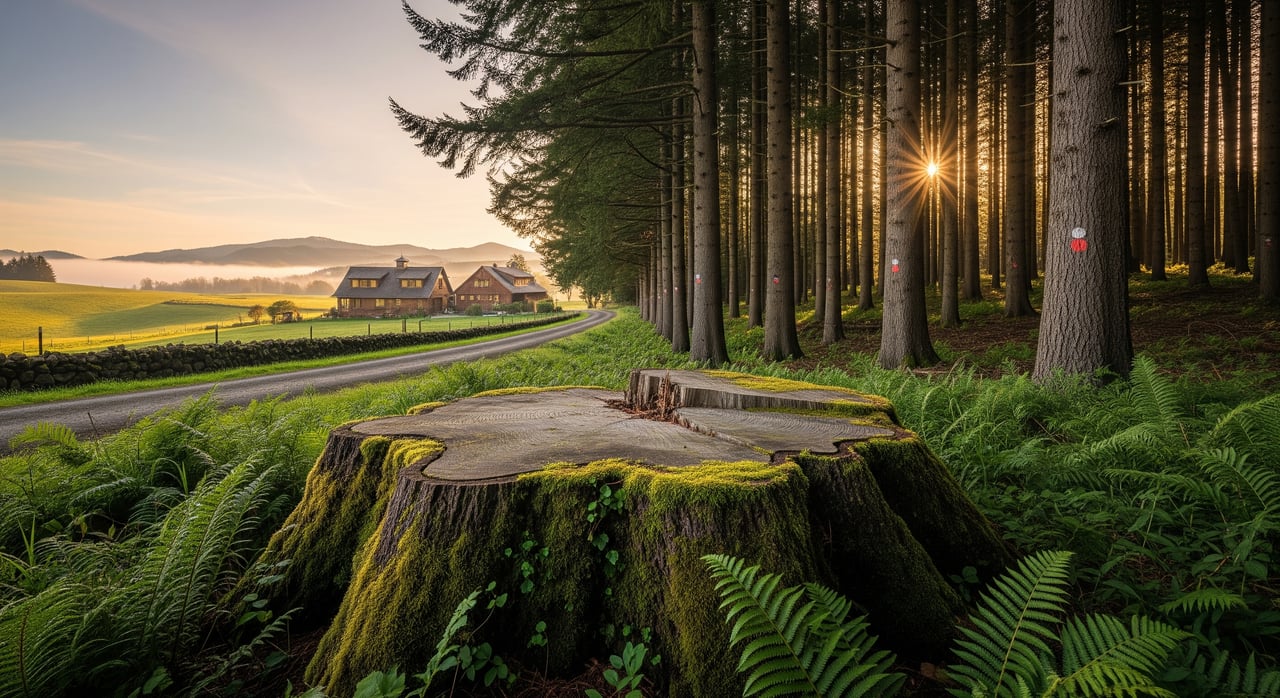
What is your timber really worth, and how do you find out without guesswork? If you own forested acreage in Philomath or greater Benton County, getting a credible number is the first step to smart decisions, whether you plan to sell, thin, or hold. A timber cruise gives you that number and the stand details behind it. In this guide, you’ll learn what a cruise covers, how it works in our local forests, which Oregon rules matter, and the steps to move from inventory to a confident sale. Let’s dive in.
What a timber cruise is
A timber cruise is a field inventory that estimates the species mix, tree sizes, and merchantable volume on your parcel. It is the basis for estimating stumpage value, planning harvest timing, and negotiating a sale. A good cruise also flags access needs and lists next steps for marketing and operations.
Typical results include:
- Estimated volume by species and log grade
- Stand metrics like trees per acre, basal area, and average tree size
- A precision statement, such as plus or minus a percentage at a chosen confidence level
- Practical recommendations for harvest, reforestation, and roads
For many private owners, the cruise is the foundation for fair pricing and a smoother transaction.
Philomath’s forest context
Around Philomath, you often see Douglas-fir on uplands, with pockets of western hemlock on wetter or higher sites. Red alder is common in riparian areas and disturbed ground. Non-commercial hardwoods like bigleaf maple and willow can appear on edges. Site quality can change within a few acres, so a parcel may have several “mini-stands” with different potential.
Local log values depend on mill demand and haul distances. An accurate cruise helps you match your timber to the right buyer and avoid surprises after cutting.
How a cruise works in the field
What gets measured
Foresters record diameter at breast height, merchantable height to a minimum top diameter, and any defects like rot or broken tops. These measurements translate into volume by species and grade.
Common sampling methods
- Fixed-area plots. Crews measure every tree inside circular plots of a known size. This is clear and effective on smaller or irregular stands.
- Variable-radius plots. Using a prism or angle gauge, crews count trees based on size and distance. This is efficient for larger or more uniform stands.
- Line transects. Crews sample along lines to capture change across slopes or soil types.
- Complete inventory. Every merchantable tree gets measured. This is used on very small parcels or when maximum accuracy is required.
Volume units and log rules
Cruises report volume in board feet or cubic feet. In the Pacific Northwest, board-foot volumes are often based on log rules like Scribner, Doyle, or International. Each rule yields a different volume from the same logs. Merchantable log lengths and minimum top diameters must be defined before the cruise, since they change reported totals. If you plan to market the timber, make sure these assumptions are written into the report.
Precision and cost
There is a trade-off between what you spend on data collection and the precision you get. More plots usually mean tighter margins of error. Talk with your forester about your goals and the precision target before fieldwork starts.
Tools and quality control
Crews carry diameter tapes, prisms, clinometers or hypsometers, GPS mapping tools, and tablets for data entry. Quality control depends on reliable species ID, consistent merchantability rules, and careful field notes. Ask your forester to document the log rule, top diameter, and log lengths used, plus any inclusion or exclusion of cull.
Oregon rules and taxes to keep in view
Oregon’s Forest Practices Act sets standards for private forest operations. If you plan to harvest, you will work within its notification process and practice rules.
Key items for landowners:
- Reforestation. Harvested areas must be restocked to meet state stocking standards within set timeframes.
- Riparian protections. Required buffers depend on stream type and activity. Stream classifications guide what you can do near water.
- Local permits. Road work, driveway crossings, and land use changes may require county permits. Check with Benton County before major earthwork or crossings.
- Fire and burning. Pile burning and controlled burns must follow Oregon Department of Forestry and local fire district rules and may need permits.
Taxes that often apply:
- Property taxes. Oregon offers forestland special assessments that can change how your land is taxed. The county assessor administers these programs.
- Timber sale income. Federal and state tax treatment depends on whether you sell lump-sum or pay-as-cut, your basis, and how you report gains or income.
- Harvest taxes and reporting. Confirm current Oregon Department of Revenue and county rules.
For current interpretations, contact the Oregon Department of Forestry, Benton County offices, and OSU Extension.
When to cruise and how to prepare
You will benefit from a cruise before a timber sale, ahead of a thinning or clearcut, or as a periodic check on stand growth. Most fieldwork is easier in the dry season, but you can cruise year-round if access is safe.
To prepare:
- Pull together parcel maps, deeds, tax lot numbers, prior harvest records, and known easements
- Provide access instructions and mark boundaries if needed
- Share your objectives, sensitive areas, and any zones you want excluded from harvest
Choosing the right forester
Most owners hire a consulting forester or a Registered Professional Forester in Oregon for the cruise and sale setup. Some also seek guidance from OSU Extension. Ask for a written scope with methods, assumptions, precision targets, and fees.
Questions to ask:
- Are you a Registered Professional Forester in Oregon?
- How many local cruises have you completed, and can you share references?
- What cruise method and log rule will you use, and what confidence level should I expect?
- How do you charge, and do you offer harvest supervision and contract drafting?
- Can you share a sample report and map?
Fee models include hourly, per-acre, per-plot, flat fees, or a percentage of sale proceeds. Confirm scope and billing in writing.
From cruise to a stronger sale
Sale methods
- Lump-sum. You agree on a fixed price for standing timber. The buyer takes on more risk tied to growth, decay, and markets after the sale.
- Pay-as-cut. You are paid based on scaled volume and grade after harvest. You share more of the measurement and market risk.
In either case, get multiple bids and put clear terms in writing.
Scaling and payment
If you sell pay-as-cut, a licensed scaler or the mill will scale logs after harvest. Final payment is based on that scale. If you sell lump-sum, understand how cruise assumptions may differ from the final scale. Agree on log rules and merchantability definitions up front.
Environmental and operational protections
Contracts should require compliance with the Forest Practices Act, protection of riparian buffers, road and erosion controls, and slash management that reduces fire risk. Ask for road plans before and after harvest, including maintenance and any stream crossing details.
Quick checklist before you order a cruise
- Gather deed, tax lot, past harvest history, maps, and easements
- Set clear objectives: sell now, thin, regenerate, or hold
- Map constraints: riparian areas, crossings, seasonal access limits
- Get 2 to 3 written proposals from qualified foresters with method, log rule, top diameter, precision target, deliverables, and fees
- Check references and sample reports
- Confirm who will handle required notifications and who will supervise harvest
- Request a draft timber sale contract or ask your forester to prepare one
How Wildland Property Group can help
If you plan to sell land or timbered acreage, you want a marketing plan that respects both the asset and the landscape. Our team pairs local, relationship-first service with technical land expertise to position your property for serious buyers. We understand timber value in the context of access, soils, water, and the broader Willamette Valley market. When you are ready, we help you coordinate with qualified foresters, frame the sale strategy, and market across local MLS and land-focused channels to reach the right audience.
You get clear guidance, a practical plan, and a partner who treats your goals like our own. Ready to talk through your options or list a timbered parcel? Connect with Wildland Property Group.
FAQs
What is a timber cruise for Philomath properties?
- It is a field inventory that estimates species, sizes, and merchantable volume on your Philomath parcel to support valuation, planning, and sale decisions.
How accurate are timber cruises in mixed stands?
- Accuracy depends on sampling intensity, stand variability, and clear rules for merchantability; ask your forester for a precision target and confidence level.
Which species are common around Philomath?
- Douglas-fir is dominant, with western hemlock on wetter or higher sites and red alder in riparian areas; hardwoods can occur on edges and disturbed ground.
Do I need a cruise for a small acreage?
- Yes, but the method may be simpler; a complete inventory or light sampling can be cost-effective and still provide a credible estimate for buyers.
What is the difference between cruising and scaling?
- Cruising estimates timber volume before harvest; scaling measures actual log volumes and grades after harvest for pay-as-cut settlements.
When is the best time to cruise in Benton County?
- Dry seasons offer easier access, but you can cruise year-round if entry is safe; plan around road restrictions and understory conditions.
What should be in my timber sale contract?
- Clear payment terms, log rules, road work and maintenance, environmental protections, reforestation responsibility, insurance, and dispute resolution.
Who enforces Oregon forest practice rules?
- The Oregon Department of Forestry administers and enforces the Forest Practices Act, while Benton County handles many local permits and tax matters.