Thinking about buying or selling acreage around Brownsville and wondering if the water will truly meet your plans? You are not alone. In Linn County, confirming the legal right to use water and the actual performance of a well or diversion is just as important as title, access, or soils. In this guide, you will learn the Oregon water-right basics, Brownsville-specific considerations in the Willamette Basin, a step-by-step due diligence process, and the red flags that can cost you time and money. Let’s dive in.
Why water rights matter
In Oregon, water is a regulated resource. Most uses of surface water and groundwater require a recorded water right that is administered by the Oregon Water Resources Department (OWRD). Limited domestic-use exemptions exist, but you should confirm applicability for your situation with OWRD.
Around Brownsville, rural parcels often rely on domestic wells, surface diversions from small streams, or historical ditch shares. Some acreage may also have service through an irrigation district or a co-op if available to that parcel. Your goal is to confirm what is legally authorized and physically reliable on the specific property.
Legal basics you need
Water-right attributes to verify
Each right has key attributes you should confirm:
- Priority date (seniority)
- Authorized rate or volume and season of use
- Point of diversion or well location
- Place of use tied to the parcel
- Type of use, such as domestic, irrigation, stock, or industrial
- Status as certificated, permitted but not yet certified, or a claimed right
These details are recorded with OWRD and determine how, when, and where you can legally use water.
Priority and curtailment
Oregon follows a priority system. Senior rights are served first in low-flow conditions, while junior rights may be curtailed during drought. In the Willamette Basin, instream flow protections and fishery considerations can further restrict diversions at certain times.
Before you close on a Brownsville acreage, evaluate the priority date and any history of curtailments affecting similar rights. Seniority can be decisive for irrigation or other seasonal uses.
Transfers and changes
Changing a point of diversion, expanding a place of use, or changing the type of use typically requires an OWRD change application and approval. Some changes are limited to prevent injury to other rights. Long-term nonuse or abandonment can also affect a right’s status.
If a seller indicates that a right will convey, confirm how it is appurtenant to the land and whether a formal transfer or other documentation will be needed.
Step-by-step due diligence
Start with records
Begin with low-cost, document-based work:
- Ask the seller for water-right numbers, well logs, well completion reports, pump data, past irrigation bills, and any written ditch or lateral agreements.
- Review the deed and title for any reservations, easements, or references to water rights.
- Search OWRD databases for permits, certificates, claims, and well records tied to the parcel’s legal description or owner name.
- Check whether any irrigation district service applies to the property and whether assessments or liens exist.
- Confirm whether basin closures, instream flow requirements, or curtailment notices could affect your source.
Verify legal status
Once you identify the rights, verify the details with OWRD:
- Confirm the right number, priority date, authorized rate or volume, season of use, point of diversion, and place of use.
- Determine the status: certificated rights are generally stronger than permits or unadjudicated claims.
- For irrigation, confirm the mapped place of use includes the exact acres you plan to irrigate.
- Ask OWRD about historical curtailments for similar rights in the Willamette Basin.
Inspect and test water
Move to physical checks that validate performance and quality:
- Well inspection: obtain well logs, then test pump capacity and static water level. A recent pump test by a licensed driller or hydrogeologist is ideal. Confirm pump age, storage, pressure systems, and electrical components.
- Water quality: test for bacteria, nitrates, arsenic, pH, and metals. For irrigation or livestock, consider salinity and specific ions.
- Surface diversion: inspect headgates, ditches, meters, and delivery conditions during the irrigation season. If a co-op or ditch company is involved, review bylaws, assessments, and usage history.
- Metering and records: collect any meter data. Accurate metering helps verify actual use and is required under some permits.
Confirm administration
Align the legal and administrative pieces before closing:
- If a right is expected to transfer, confirm appurtenance and whether any change application or formal conveyance is required.
- Consult OWRD on needed applications and likely timelines for any new or changed uses.
- Engage a water-rights attorney or qualified consultant for complex situations, such as shared rights, disputed claims, or historical ditch arrangements.
- Ask OWRD about any enforcement actions, conservation measures, or pending rule changes that could affect the property.
Assess risks and plan
Create a risk profile and contingency plan:
- Curtailment risk: junior rights face higher curtailment risk in drought years.
- Groundwater reliability: shallow aquifers can draw down during dry summers, and nearby wells may influence performance.
- Backup plans: for domestic wells, consider storage capacity, emergency water hauling, and pump replacement scenarios.
- Budgeting: set aside funds for potential well work, pump replacement, water-right transfers, or treatment to address water-quality issues.
Brownsville-specific tips
Brownsville sits in the Willamette Valley with surface water systems and aquifers recharged by local precipitation and streamflows. Seasonal drawdown can affect shallow wells, especially during dry summers. Reliability improves when you verify well construction details, documented yields, and meter records when available.
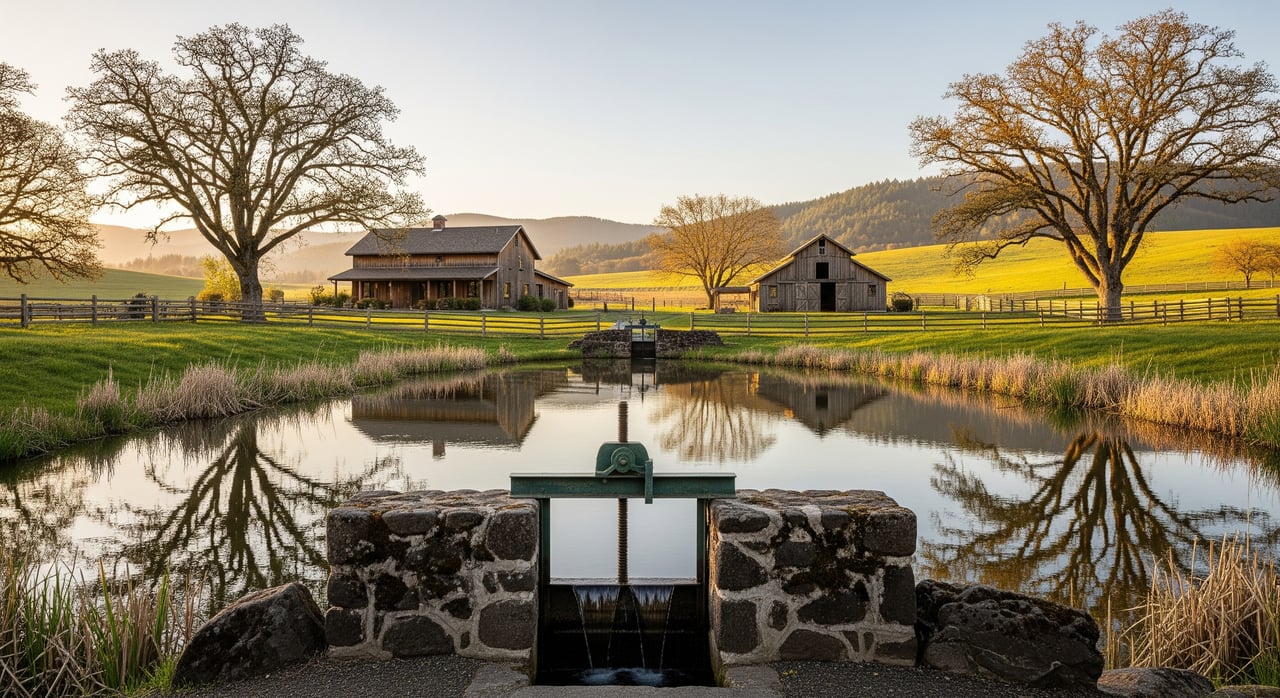
If an acreage has a surface diversion, understand the timing of irrigation season, any ditch or co-op governance, and how instream protections may affect withdrawals. For parcels that claim historical ditch-based rights, map the place of use carefully and verify written agreements.
Red flags to watch
- No recorded water right or well permit for a claimed use
- Place of use does not include the subject parcel
- Junior priority in an area with frequent curtailments
- Missing well log or a log that shows low yield for your needs
- No pump test or unclear practical flow records
- Water right ownership split from land, or rights in litigation
- Missing meters where required, or inconsistent usage data
- Signs of long nonuse without explanation
- Known water-quality issues or pending advisories
- Ditch or co-op assessments, liens, or unstable governance
Buyer checklist
- Obtain seller-provided documents: water-right numbers, well log, recent pump test, meter records
- Search OWRD records for rights and well permits; confirm place of use and priority date
- Hire a licensed driller or hydrogeologist for a pump test and system inspection
- Order lab testing for bacteria, nitrates, arsenic, pH, and metals
- Confirm whether a domestic exemption applies or a permit is required
- Check for OWRD curtailments, instream flows, or basin closures that may affect the source
- Ask title and county offices about any easements, reservations, or encumbrances tied to water
- Consult a water-rights attorney for transfers, changes, or disputes
- Include water-related contingencies in your purchase agreement
Timing and costs
OWRD applications for permits or changes can take months to years depending on complexity and objections. Routine record checks can be handled quickly. Costs vary based on application fees, drilling and pump testing, lab analysis, and professional services. Drilling or rehabilitating a well can be significant, so request local quotes and plan contingencies.
How Wildland supports you
You deserve a clear path from contract to closing. As a Willamette Valley land-focused team, we help you organize the right documents, coordinate well and water-quality testing, and align timelines with OWRD processes. For complex cases, we connect you with local well contractors, water-rights consultants, and attorneys, and we build water contingencies into your offer strategy.
For sellers, we help gather records upfront, clarify what rights convey, and present accurate, buyer-ready information. That reduces surprises, helps pricing reflect the true value of water, and positions your Brownsville acreage competitively across MLS and land-specific channels.
Ready to explore acreage or prepare your property for market with clear water-rights due diligence? Reach out to the team at Wildland Property Group.
FAQs
Brownsville acreage: Can I drill a new well?
- Most new wells require an OWRD permit; limited domestic-use exemptions may apply case by case, and basin rules can constrain pumping.
Brownsville water rights: Do rights transfer with land?
- Many rights are appurtenant and transfer with the parcel, but some require formal change or conveyance; confirm with deed, title, and OWRD.
Irrigation proof in Linn County: Is “always irrigated” enough?
- No. Historical use is not the same as a recorded right; request right numbers, place-of-use maps, and any assessed district records.
Curtailment risk in the Willamette Basin: How do I check?
- Review the right’s priority date and ask OWRD about curtailment history; senior rights are served first during drought conditions.
Enforcement in Oregon: Who makes curtailment calls?
- OWRD and watermasters handle enforcement, and fishery and environmental protections can also trigger restrictions.
Water-rights counsel: Do I need an attorney?
- Straightforward transfers with clear documentation may not require one, but complex changes, disputes, or ditch agreements benefit from counsel.